Triadic Mutualism - Intercity Synchronicity
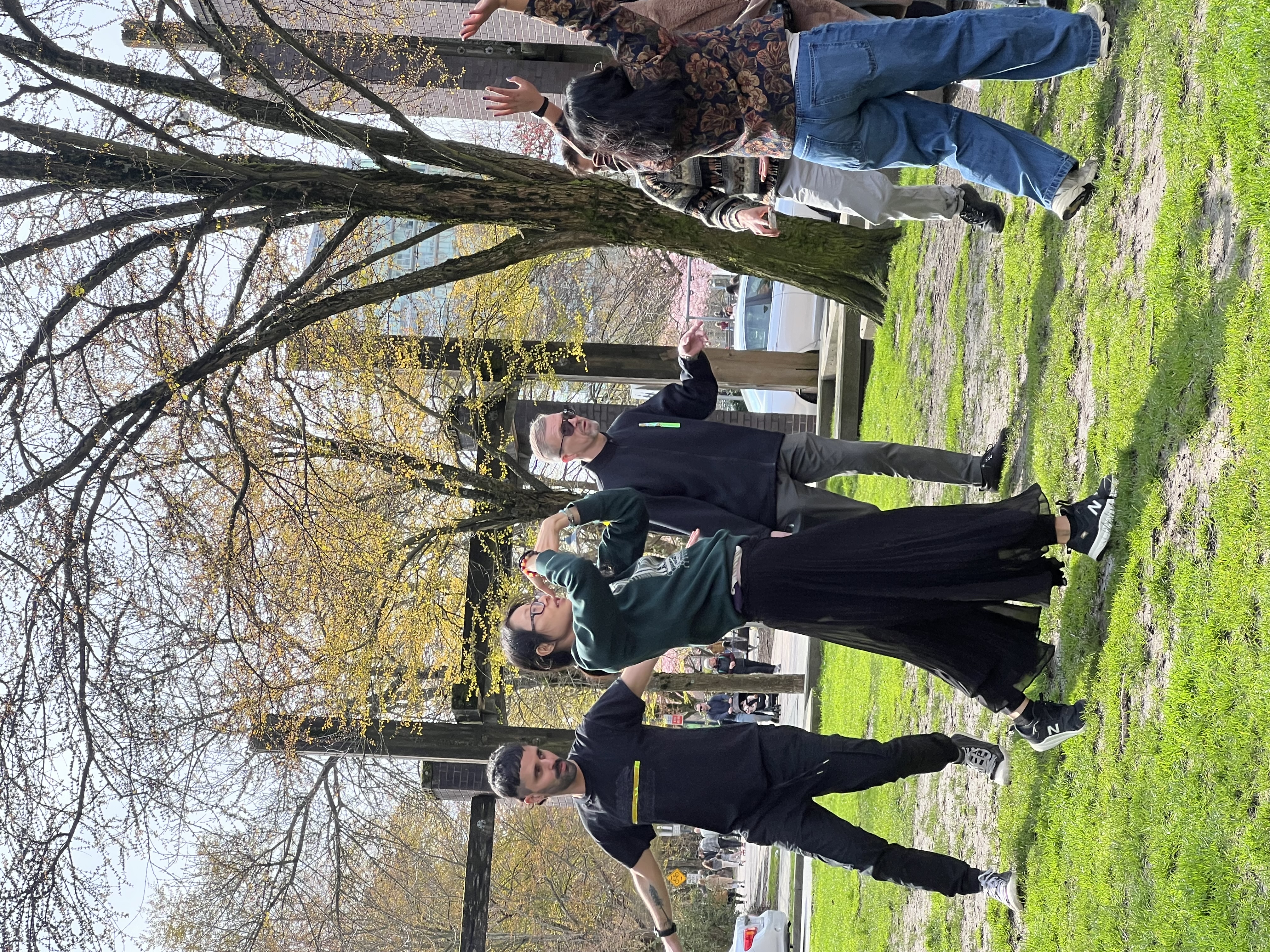
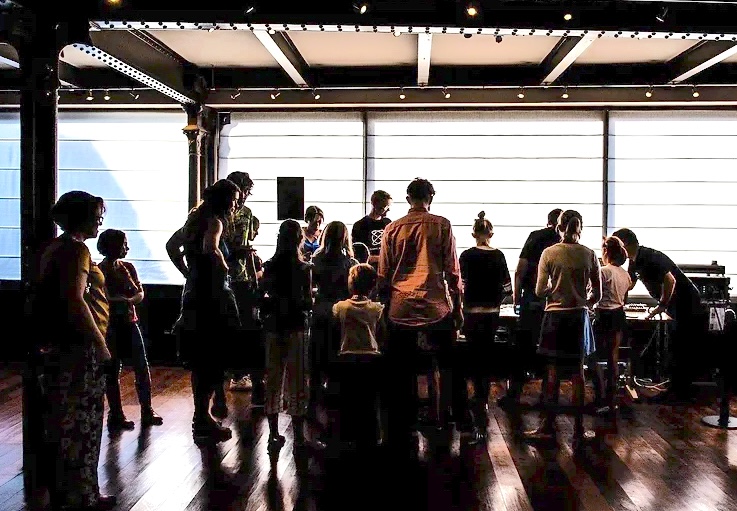
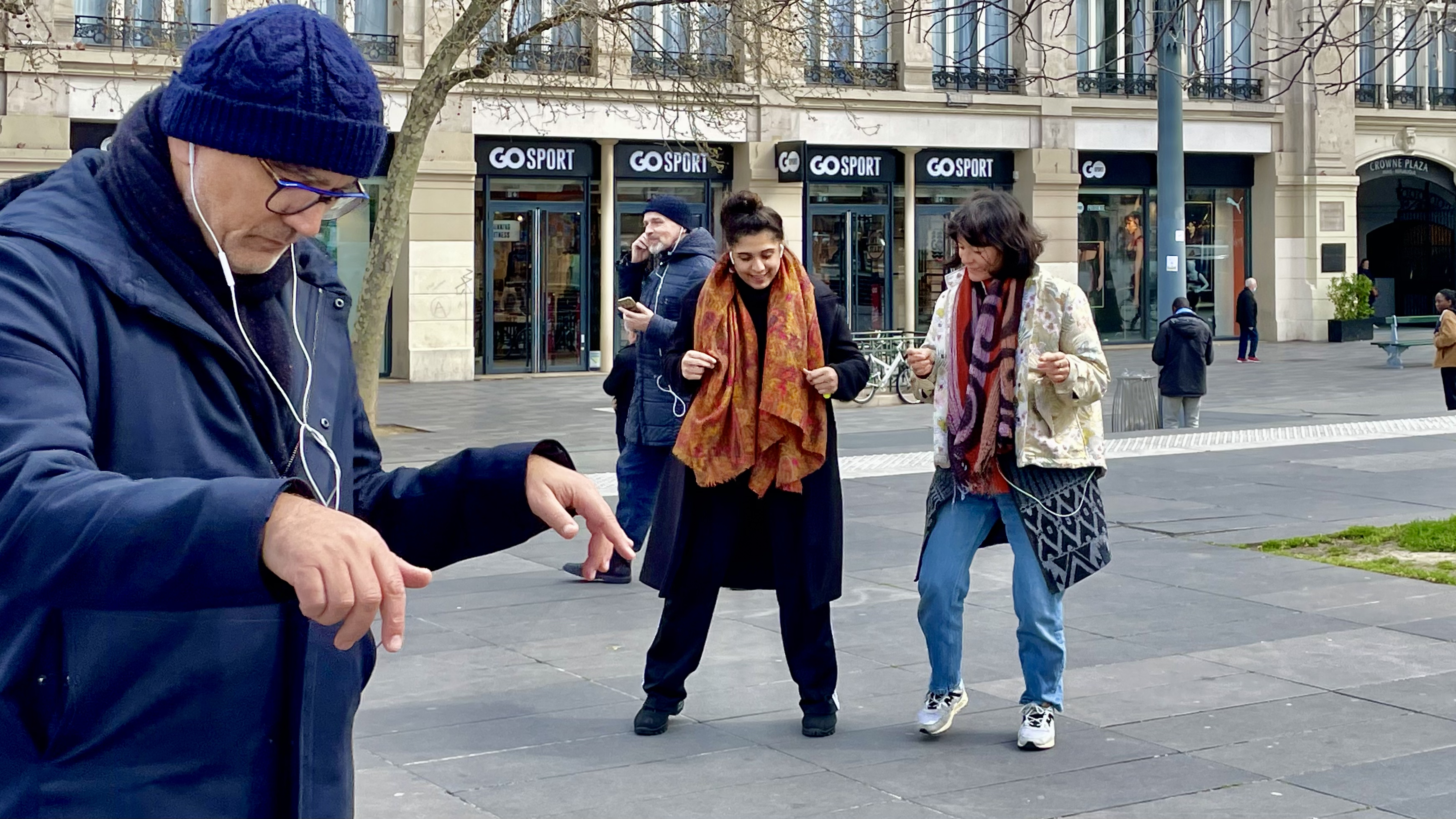
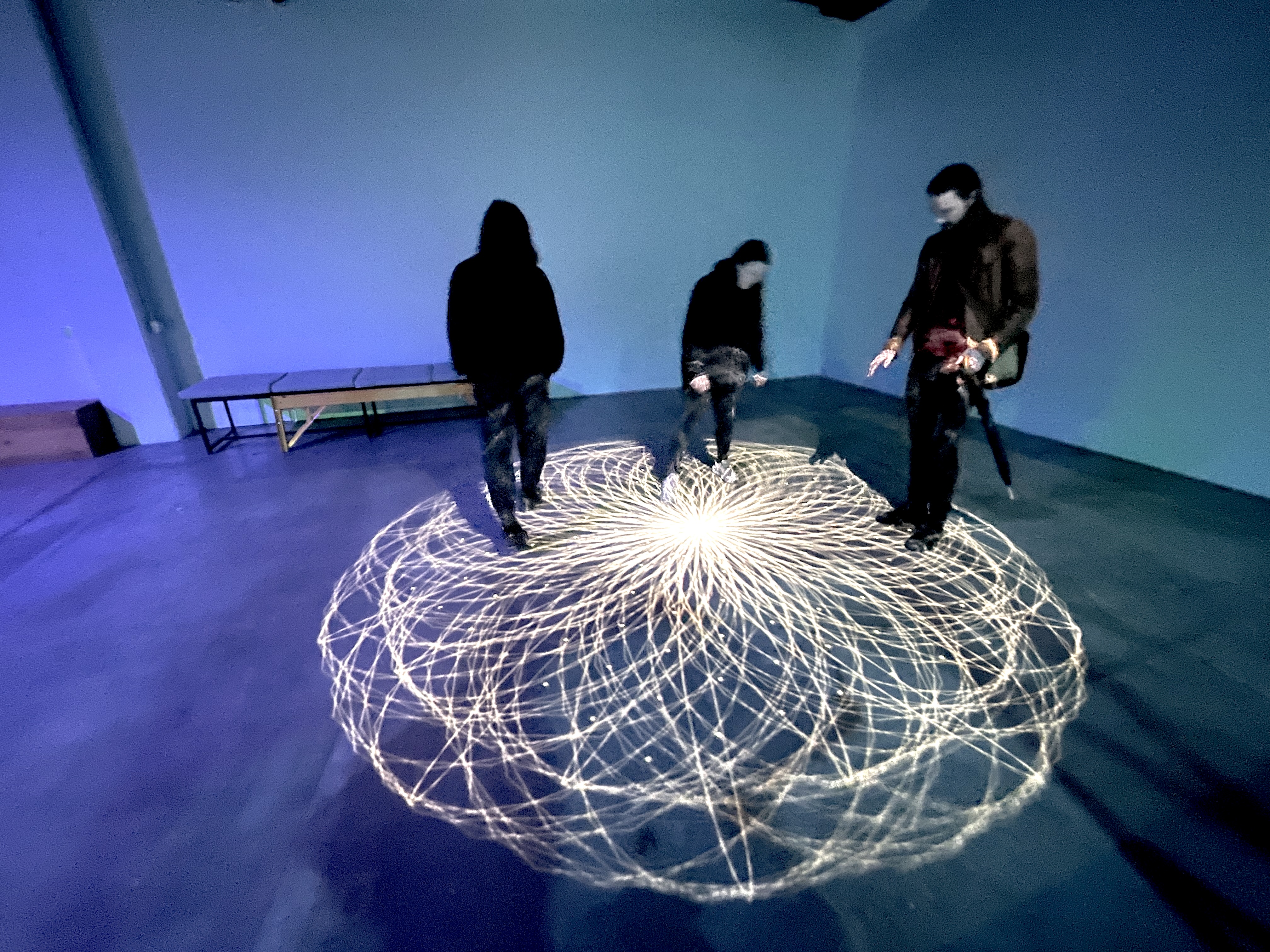
This piece was created in collaboration with Ezequiel Peralta for PXR Conference 2026. Shown simultaneously at VIVO Media Arts in Vancouver, BC, Toronto and Kingston, Ontario, it is a networked participatory audiovisual environment in which collective movement becomes the driving force of a shared musical and ecological system. Visitors encounter a luminous field on the floor that appears responsive but not didactic. As they move, pause, follow, gather, or disperse, they begin to perceive that the environment is listening to qualities of behaviour rather than simple triggers. Musical changes emerge from their collective activity, while smaller zones allow them to engage with remote sites, summon exchanges, or influence other communities. Over time, the piece reveals itself as a social instrument and an ecological score, an emergent multi agent system whose local and global states are continuously negotiated through motion, attention, exchange, and co presence.
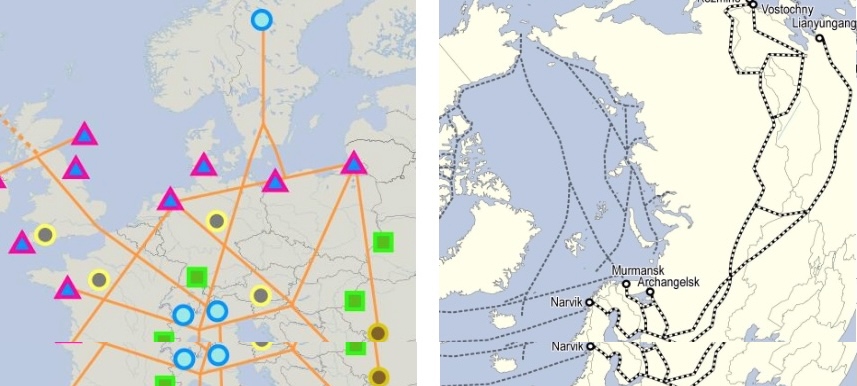
Across multiple sites, geographically distributed audiences can influence one another through designated portal zones that connect remote locations in real time. These cross site exchanges are framed through bioinformed concepts such as migration, diversity, metabolic balance, flock health, and resource circulation. When groups become active, coordinated, or mutually responsive, the system produces events such as tokens, exchanges, or energetic shifts that alter both the local visual field and the evolving musical form.
The project sits at the intersection of participatory installation, embodied sonification, social choreography, and systems art. It proposes music not as a fixed composition, but as an emergent property of collective behavior. The audience does not simply activate content; it enters into a reciprocal relation with a dynamic environment that listens, interprets, and responds at the scale of both the individual and the group.
Its telematic structure extends the work beyond a single site, allowing audiences in different cities to encounter one another as abstract presences inside a shared ecological musical world. This creates a distributed public made legible through movement, rhythm, and changing systemic conditions rather than language alone. The work therefore offers a live model of interdependence: between bodies and sound, between local action and remote consequence, and between individual agency and collective form.